
AI Agents Development: Complete Guide to Building Autonomous AI Systems
AI agents development is becoming one of the most important fields in artificial intelligence and software engineering. Modern AI agents are capable of perceiving data, making decisions, and performing actions autonomously without constant human intervention.
Developers around the world are increasingly integrating AI agents into software applications to automate workflows, improve decision making, and create intelligent digital assistants.
What Is an AI Agent?
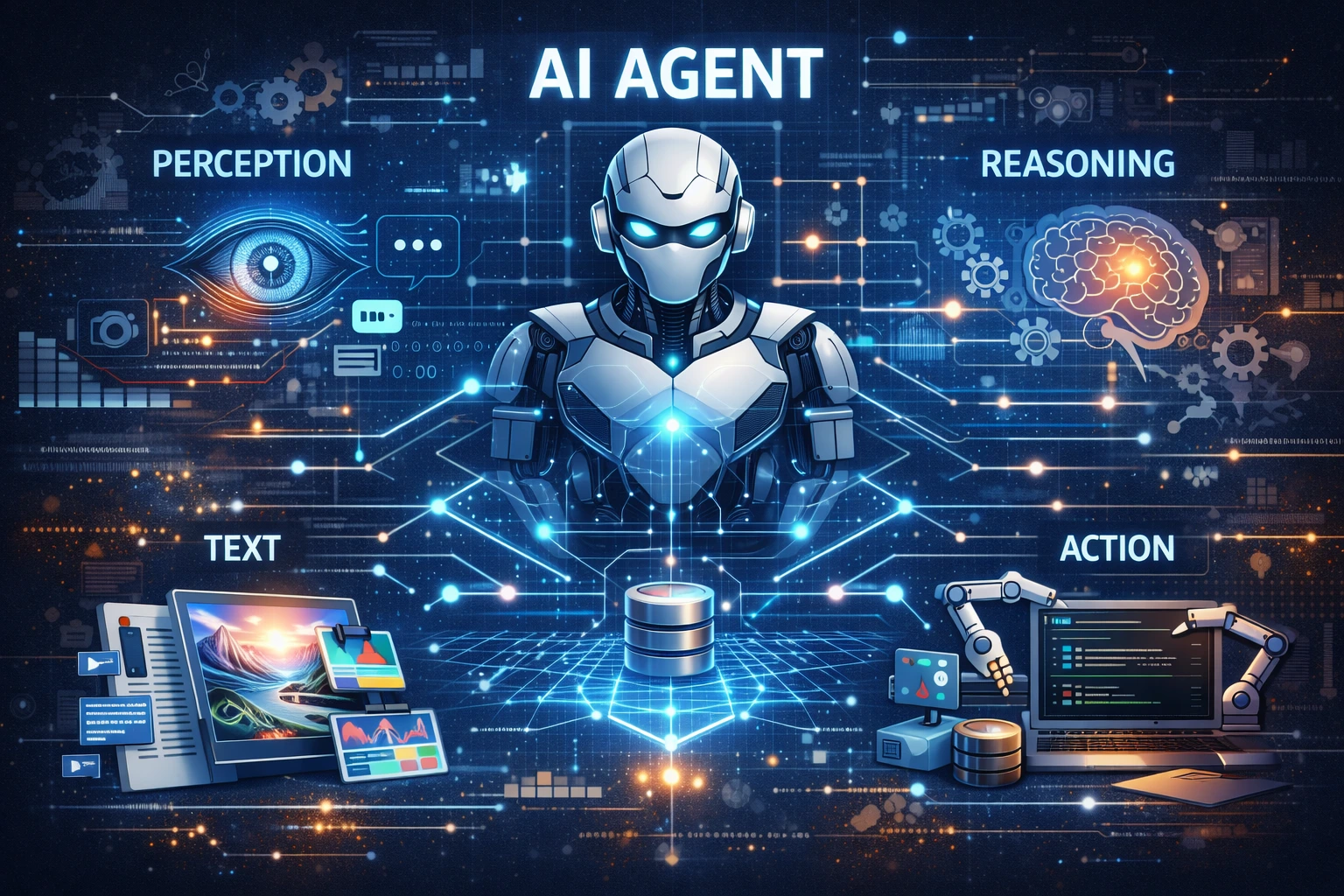
An AI agent is a software system that can observe its environment, process information, and take actions to achieve specific goals. Unlike traditional programs that follow fixed rules, AI agents adapt their behavior based on data and experience.
AI agents are commonly used in applications such as recommendation engines, chatbots, virtual assistants, autonomous vehicles, and intelligent automation systems.
Why AI Agents Are Important for Modern Software Development
As digital systems grow more complex, developers need intelligent systems capable of handling tasks automatically. AI agents provide this capability by continuously analyzing data and making decisions in real time.
Key Advantages of AI Agents
- Autonomous decision making
- Automation of complex workflows
- Improved system efficiency
- Scalable intelligent systems
- Reduced operational costs
These advantages make AI agents a core component of modern AI powered applications.
Core Components of an AI Agent
1. Perception Layer
The perception layer allows the AI agent to observe and collect data from its environment. This data may include user input, system logs, sensor data, or external APIs.
2. Reasoning Layer
The reasoning component processes collected information and determines the best possible action. This layer often uses machine learning models or rule-based systems.
3. Action Layer
Once the agent determines the optimal decision, the action layer executes the required tasks. For example, an AI agent may respond to a customer question, trigger a workflow, or update a database.
Types of AI Agents
Reactive Agents
Reactive agents respond directly to environmental inputs without maintaining internal state. They are commonly used in simple automation systems.
Model Based Agents
Model based agents maintain internal knowledge of the environment and can make more informed decisions.
Goal Based Agents
Goal based agents evaluate multiple possible actions and select the one that best achieves a defined objective.
Learning Agents
Learning agents improve their performance over time by analyzing past actions and outcomes. These agents use machine learning algorithms to continuously improve decision making.
AI Agent Development Architecture
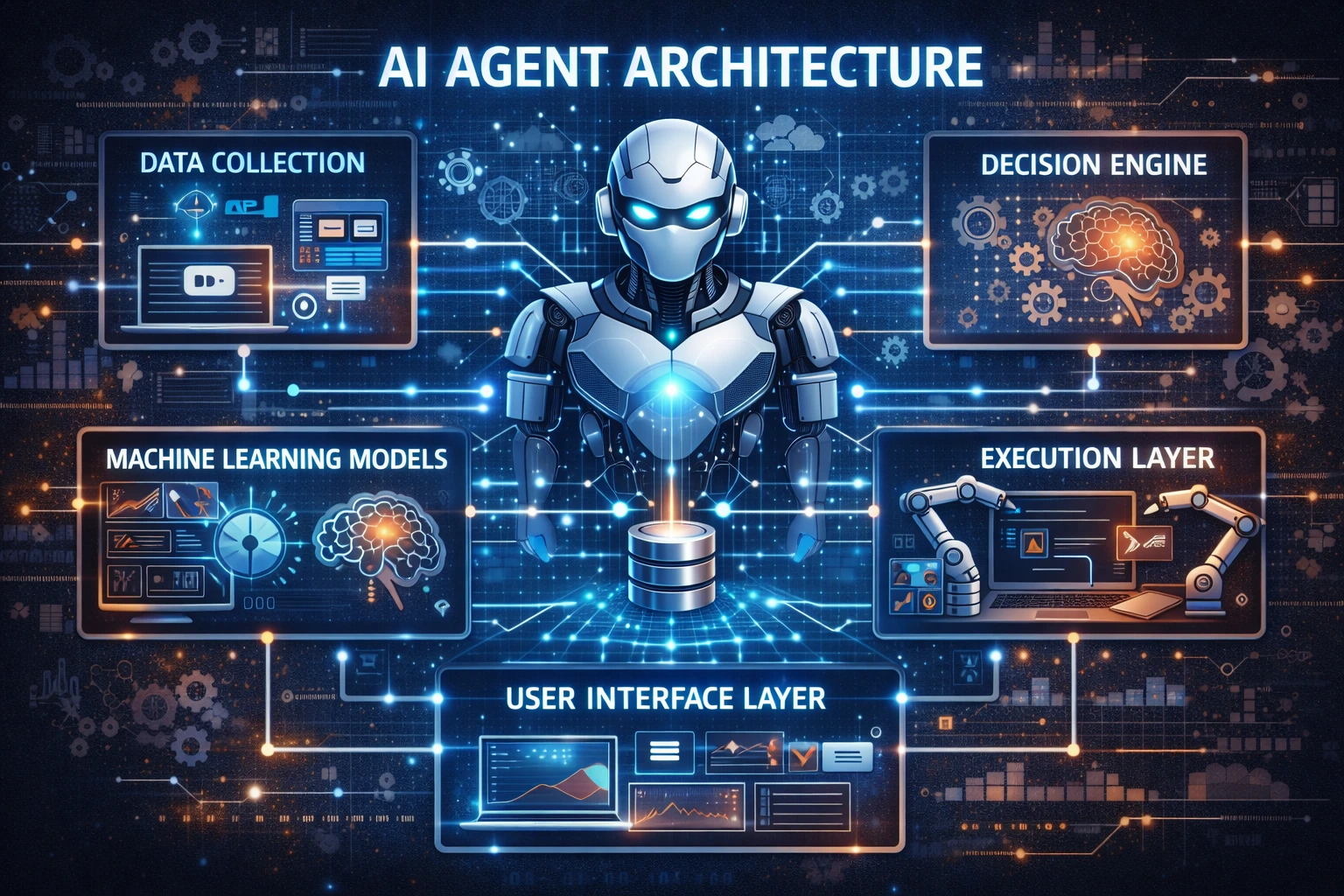
Developers building AI agents typically follow a layered architecture that separates data processing, reasoning logic, and execution layers.
- Data collection layer
- Machine learning model layer
- Decision engine
- Execution layer
- User interface layer
This architecture ensures that AI agents remain scalable and maintainable as applications grow.
Popular Frameworks for AI Agent Development
Developers building AI agents often rely on specialized frameworks that simplify integration with machine learning models.
- LangChain
- AutoGPT
- Hugging Face Transformers
- OpenAI API
- Microsoft Semantic Kernel
These frameworks allow developers to build complex AI workflows with minimal code.
Real World Applications of AI Agents
Customer Support Automation
AI agents power many modern customer support systems by automatically answering questions and resolving common issues.
Financial Fraud Detection
Financial institutions use AI agents to monitor transactions and detect suspicious behavior in real time.
Smart Recommendation Systems
E-commerce platforms rely on AI agents to recommend products based on user preferences and browsing behavior.
Autonomous Robotics
Robotics systems use AI agents to analyze sensor data and make decisions about navigation and movement.
Challenges in AI Agent Development
Complex System Design
Designing autonomous systems requires careful architecture planning and reliable data pipelines.
Data Quality
AI agents depend heavily on high quality datasets to make accurate decisions.
Security and Reliability
Developers must ensure AI agents operate safely and do not produce harmful outputs.
Best Practices for AI Agent Developers
- Implement continuous monitoring systems
- Validate AI decisions before execution
- Use scalable cloud infrastructure
- Design modular system architectures
Future of AI Agents
AI agents are expected to play a major role in the future of automation and intelligent systems. In the coming years autonomous agents will manage entire workflows in industries such as finance, logistics, healthcare, and software development.
Developers who master AI agents development today will be at the forefront of the next technological revolution.
Conclusion
AI agents development is transforming how intelligent systems are designed and deployed. By combining machine learning models, decision engines, and automation frameworks, developers can build powerful autonomous systems capable of solving complex problems.
If you are interested in intelligent automation systems, you may also explore our article on AI Automation for Developers.