
AI Automation for Developers: Complete Guide to Building Intelligent Workflows
Artificial intelligence is transforming modern software development. One of the most impactful trends is AI automation for developers, which allows engineers to automate repetitive tasks, analyze large datasets, and build intelligent applications faster than ever before.
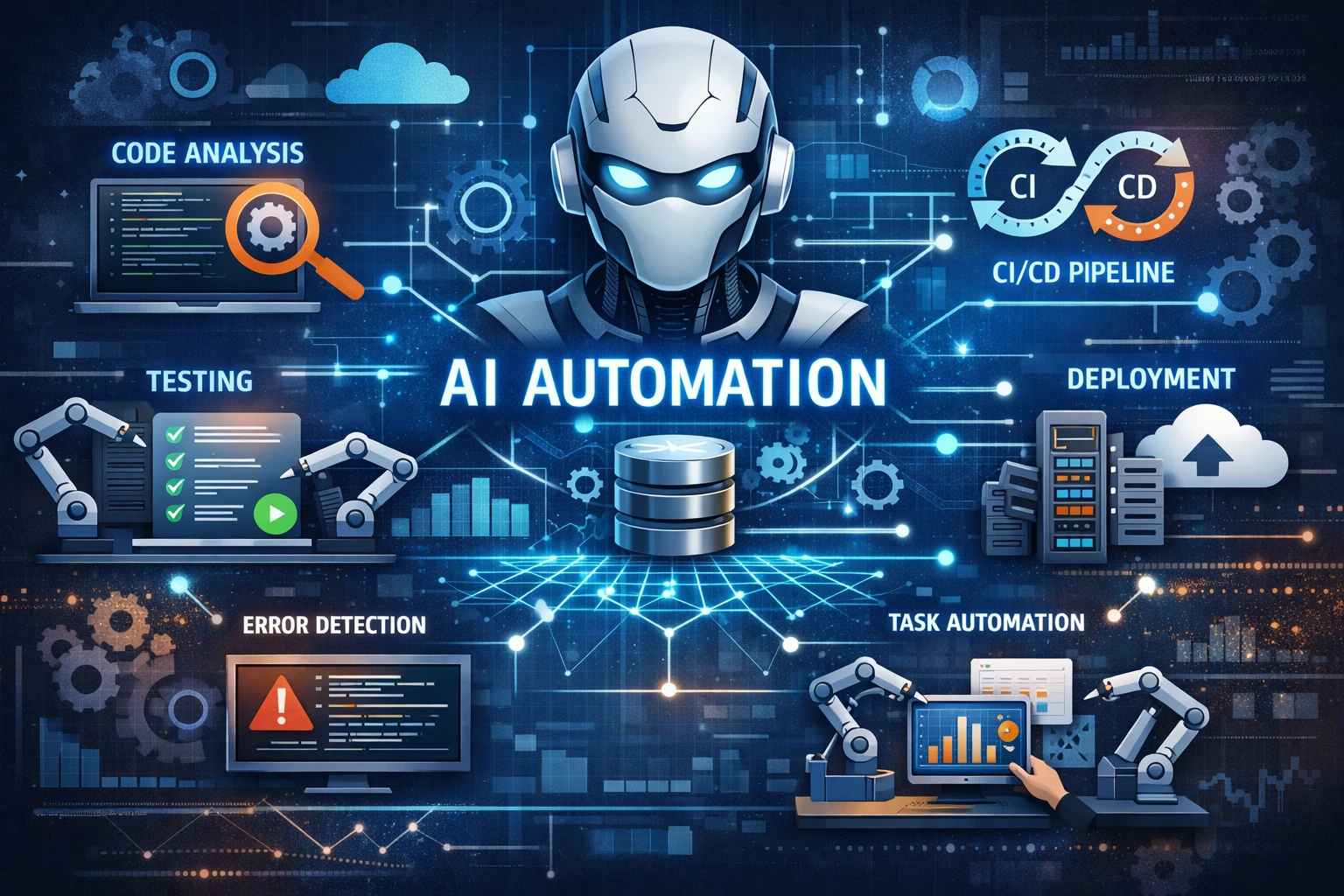
In the past, developers relied heavily on manual processes for testing, debugging, monitoring, and deployment. Today, AI powered tools can automate many of these tasks, improving productivity and reducing development time.
What Is AI Automation for Developers?
AI automation refers to integrating artificial intelligence technologies such as machine learning, natural language processing, and predictive analytics into software development workflows. These technologies enable systems to perform tasks automatically and make intelligent decisions based on data.
For developers, AI automation means building systems that can learn from data, optimize processes, and automate complex operations without constant human intervention.
Why AI Automation Matters in Modern Software Development
Software systems are becoming increasingly complex. Applications must handle millions of users, large data streams, and constantly evolving security threats. Manual processes alone are no longer sufficient.
AI automation helps developers manage complexity by providing tools that monitor systems, detect issues automatically, and suggest solutions.
Key Advantages
- Faster development cycles
- Improved software reliability
- Reduced operational costs
- Better scalability for large systems
Core Components of AI Automation
1. Machine Learning Models
Machine learning models enable software systems to learn from historical data. Developers use these models to build recommendation systems, fraud detection engines, and predictive analytics tools.
2. Intelligent Automation Pipelines
AI powered automation pipelines can analyze logs, monitor system metrics, and detect anomalies before they cause failures.
3. Natural Language Processing
NLP technologies allow systems to understand human language. Developers use NLP to build chatbots, virtual assistants, and automated documentation tools.
Real World Use Cases of AI Automation
AI Powered DevOps
DevOps teams increasingly use AI systems to monitor infrastructure and automatically respond to incidents. AI tools analyze logs, detect unusual behavior, and trigger alerts or automated fixes.
Automated Code Generation
Modern AI coding assistants such as GitHub Copilot help developers generate code snippets, write documentation, and identify potential bugs.
Smart Testing Systems
AI driven testing frameworks can automatically generate test cases and detect software vulnerabilities before release.
Best Tools for AI Automation in Development
- OpenAI API
- LangChain
- GitHub Copilot
- TensorFlow
- AutoGPT
These tools enable developers to integrate AI functionality directly into their applications.
AI Automation Architecture Example
A typical AI automation architecture includes several layers:
- Data collection layer
- Machine learning model layer
- API integration layer
- Application interface layer
This layered architecture allows developers to build scalable AI systems that can adapt to changing requirements.
Challenges of AI Automation
Despite its advantages, AI automation introduces new challenges that developers must address.
Data Quality Issues
Machine learning systems rely heavily on data. Poor quality datasets can lead to inaccurate predictions and unreliable automation results.
System Complexity
AI systems can be complex to design and maintain. Developers must carefully design infrastructure to ensure scalability and reliability.
Ethical Considerations
AI systems can unintentionally introduce bias. Developers must ensure that models are trained responsibly.
Future of AI Automation for Developers
The future of software development will rely heavily on intelligent automation. Developers will increasingly collaborate with AI systems that assist with coding, debugging, and system design.
As AI tools continue to evolve, developers will spend less time on repetitive tasks and more time focusing on creative problem solving and architecture design.
Conclusion
AI automation for developers is no longer a futuristic concept. It is already transforming how modern software systems are built and maintained. Developers who embrace AI powered tools today will gain a significant advantage in the rapidly evolving technology landscape.
You may also explore our detailed guide on Generative AI Development for Developers.